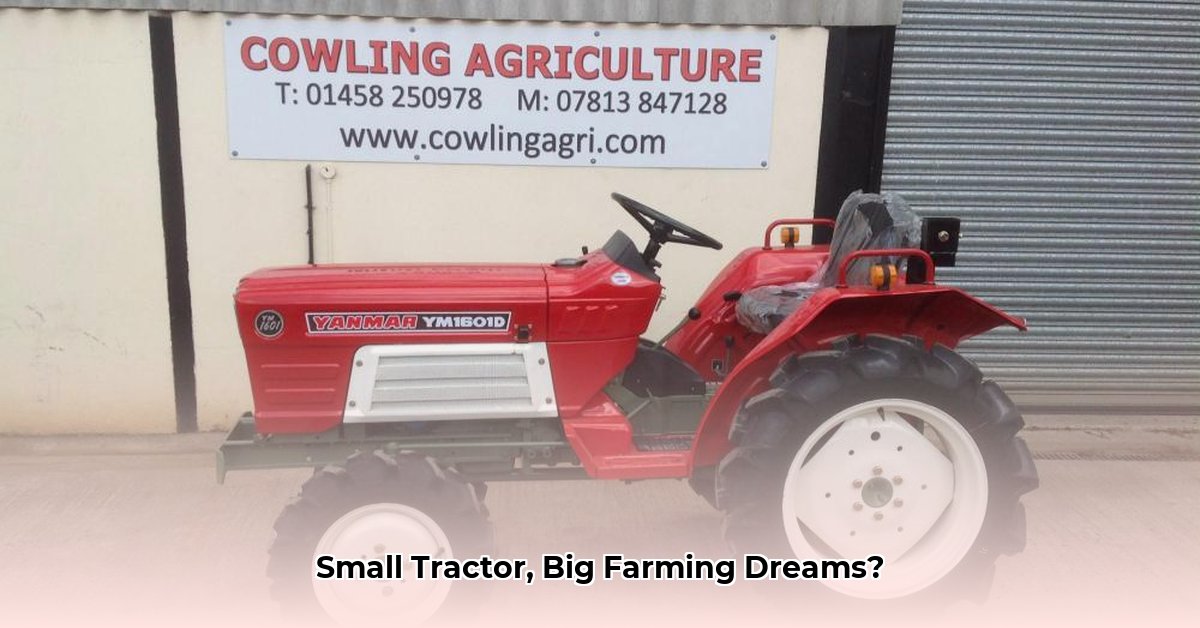
Small Yanmar Tractor: Your Path to Sustainable Farming Success
Ready to boost your farm's efficiency and sustainability? A small Yanmar tractor can be a game-changer, enabling smarter, greener farming practices. This guide provides practical instructions and information to help you maximize its potential for sustainable agriculture. We'll cover implement usage, maintenance, fuel efficiency, GPS integration (where applicable), and safety protocols, comparing it to other options and analyzing its cost-effectiveness and environmental impact. Learn more about the right implements for your needs with this helpful resource: attachments guide.
Harnessing Precision Power: Using Your Implements
The Yanmar's versatility is key to sustainable farming. Its compact size allows for precision agriculture, minimizing soil compaction and maximizing efficiency.
Precision Seeders: These attachments ensure precise seed spacing, saving seeds, improving germination rates, and resulting in healthier crops. Imagine perfectly spaced rows, optimizing both yield and resource use.
No-Till Tillers: These minimize soil disturbance, preserving soil structure, beneficial microorganisms, and water retention, while reducing erosion. It’s a gentler approach that benefits both your soil and the planet.
Targeted Weeders: These tools allow for precise weed removal, reducing reliance on broad-spectrum herbicides and promoting biodiversity. Targeted weed control conserves resources and protects beneficial insects and plants.
Keeping Your Tractor Happy: Simple Maintenance for Long Life
Regular maintenance is crucial for the long-term sustainability of your operation. It is as important to your tractor as proper nutrition is to a healthy crop.
Oil Changes: Follow the owner's manual recommendations for regular oil changes. This simple step significantly extends engine life and improves fuel efficiency. A healthy engine is a fuel-efficient engine.
Filter Checks: Regularly check and replace air and fuel filters to prevent engine damage and maintain optimal performance. This preventative care prevents costly repairs later.
Tire Inflation: Maintain proper tire pressure to maximize fuel efficiency and traction. Under-inflated tires waste fuel and increase wear, potentially leading to unsafe operation.
For more significant repairs, consult your owner's manual or a qualified mechanic. This proactive approach protects your investment and ensures long-term reliability.
Fuel Efficiency: Getting the Most from Every Drop
Fuel costs are a significant expense. The Yanmar’s design prioritizes fuel efficiency. How can you maximize this?
Regular Maintenance: As noted above, a well-maintained engine is a fuel-efficient engine. Proper maintenance directly translates to reduced fuel consumption.
Smart Operation: Avoid unnecessary strain on the engine by matching power to the task. Work smarter, not harder, to optimize fuel use.
Tire Pressure: Proper inflation significantly reduces rolling resistance, leading to improved fuel economy. This is a simple yet impactful practice.
Isn't fuel efficiency a key component to a successful and sustainable operation?
GPS: Farming with a Smart Co-Pilot (Where Applicable)
GPS integration enhances the precision and efficiency of your farming practices. (Note: This feature may vary depending on the Yanmar model.)
Variable Rate Application: Apply fertilizers and pesticides only where needed, minimizing waste and environmental impact. It's a precise approach to resource management.
Auto-Steering: GPS-assisted steering reduces operator fatigue, improves row straightness, and minimizes overlap, boosting efficiency. This is like having an automated assistant in your field.
Safety First: Sustainable Farming Requires Responsible Practices
Safety is paramount. Always prioritize safety to protect yourself and your team.
Personal Protective Equipment (PPE): Always wear appropriate safety gear including eye protection, gloves, and hearing protection. This is not optional.
Proper Training: Ensure all operators are adequately trained on safe tractor operation. Familiarize yourselves with safety features and emergency procedures.
Regular Inspections: Before each use, conduct a pre-operation inspection to identify and address any potential hazards. This is a crucial step in safe operation.
Comparing Compact Tractors: The Yanmar Advantage
The Yanmar stacks up favorably against competitors in terms of fuel efficiency, ease of maintenance, and sustainability features. The following is a general comparison; specific model variations may exist.
| Feature | Small Yanmar Tractor | Competitor A | Competitor B |
|---|---|---|---|
| Fuel Efficiency | Excellent | Good | Fair |
| Ease of Maintenance | Easy | Moderate | Difficult |
| Purchase Price | Moderate | High | Low |
| Sustainability Features | Excellent | Good | Fair |
While the initial purchase price may be moderate, the long-term cost savings from superior fuel efficiency and ease of maintenance, coupled with its sustainability advantages, often provide a significant return on investment.
Eco-Friendly Design: Minimizing Your Environmental Impact
The Yanmar's compact size minimizes soil compaction, improving soil health and water absorption. Its fuel efficiency contributes to a reduced carbon footprint. These factors contribute to the tractor's overall positive environmental impact. Isn't minimizing our environmental footprint one of the goals of sustainable agriculture?
Cost-Benefit Analysis: A Sustainable Investment
Investing in a Yanmar tractor offers many financial benefits. The reduced labor costs from mechanization, increased yields from improved soil health, and reduced fuel consumption contribute to a strong return on investment. A long-term perspective reveals the financial viability of this investment.
Key Takeaways:
- A small Yanmar tractor is a powerful tool for sustainable farming.
- Its compact size and features minimize soil compaction and promote fuel efficiency.
- Regular maintenance is vital for maximizing the tractor's lifespan and performance.
- The initial investment yields substantial long-term benefits in terms of increased productivity, reduced costs, and environmental sustainability.